
 Felix Mckinney
Singapore’s real estate market is catching the eye of investors worldwide. The city-state’s home prices have been rising steadily, reaching new peaks. This is due to growing demand from both local and international buyers.
The government plans to increase housing, especially in areas like Sembawang and Woodlands. This has made Singapore’s property sector even more appealing.
New projects aim to add about 14,000 homes by 2035. These will include BTO flats and private homes. They will come with amenities like shops, parks, and community centers.
The high-end market, including luxury apartments and landed properties, is also seeing a lot of interest. Prices in this segment have gone up by over 3% this year.
Key Takeaways
- Singapore’s residential property prices have hit new highs, attracting both local and foreign investors.
- The government’s plans to increase housing development in northern areas aim to build around 14,000 new homes by 2035.
- High-end segments, such as luxury apartments and landed properties, are experiencing strong demand and price appreciation.
- Investors are closely monitoring the performance and strategies of Singapore’s leading property developers.
- Factors like economic conditions, government policies, and evolving consumer preferences are shaping the investment landscape.
Overview of Singapore’s Real Estate Market
Singapore’s real estate market is changing fast. It’s moving towards mixed-use developments and sustainable planning. We’re seeing more integrated communities, green technologies, and eco-friendly designs.
The last decade has brought big changes. Developer stamp duties and proptech have become more important. Now, developers focus on shared facilities and space-efficient designs.
This change is part of the government’s plan. They aim to launch 100,000 Build-To-Order (BTO) flats by 2025. They also plan to release 5,450 private homes in the first half of 2024. These moves will shape the future of luxury condos, residential projects, and commercial properties.
The Singapore Real Estate Market is expected to grow. It’s set to reach USD 46.58 billion by 2024. By 2029, it could hit USD 64.04 billion, growing at 6.57% annually.
Major Property Developers in Singapore
Singapore’s property scene is led by top firms known for their quality and innovation. Hongkong Land Holdings owns MCL Land, a Singapore developer worth S$1.1 billion. They plan to sell MCL Land to grow their assets from US$40 billion to US$100 billion by 2035.
Recent highlights include Parc Clematis by MCL Land, with 400,000 square feet for common areas. Normanton Park by Kingsford Development has 60% of its 661,000 square feet for communal spaces. Developers aim for balanced tenant mixes in mixed-use projects, like Woodleigh Residences by CapitaLand and Pasir Ris 8 by Capitaland.
Leading developers in Singapore, such as CapitaLand and City Developments Limited (CDL), are making a big impact. They deliver top-notch residential and commercial projects. These meet the needs of both locals and international buyers.
Economic Factors Influencing Investment
Singapore’s property market is shaped by the country’s economic health. As it recovers from the pandemic, investors watch key economic signs closely. Residential prices have gone up by over 3% this year, showing strong demand.
But, experts warn about market overheating. They advise buyers to watch out for interest rate changes and other economic shifts.
The commercial real estate sector in Singapore is also getting a lot of attention. Office space rents are rising, and multinational corporations are showing interest. Fluctuating exchange rates and geopolitical tensions could make things more complicated for real estate investors.
Singapore has limited land, with only 728.3 square kilometers. This makes balancing supply and demand even more important. An increase in demand with limited supply can push property values up. Population growth and low interest rates also help keep property prices rising.
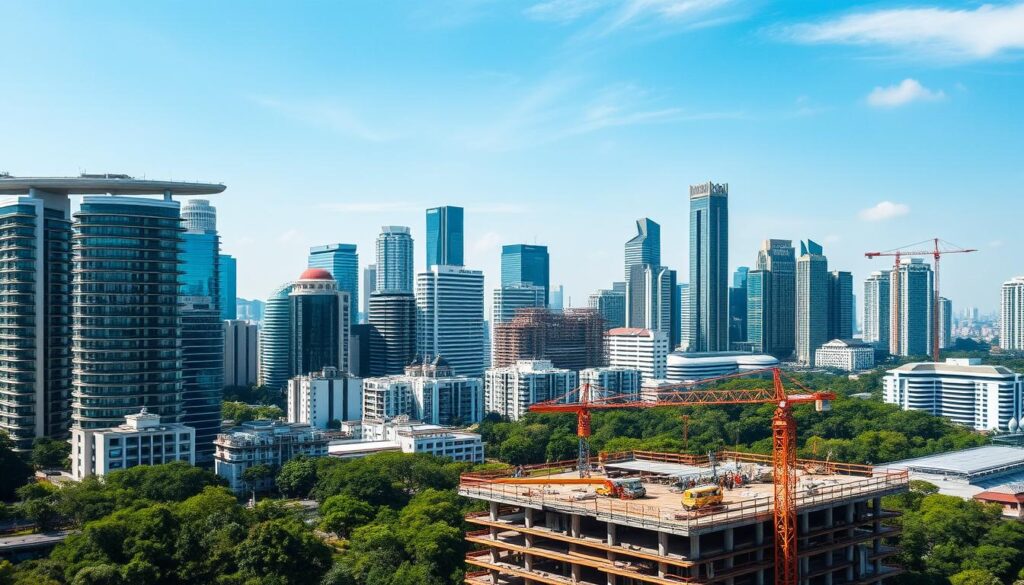
As Singapore’s economy changes, property investors need to keep an eye on economic factors. They should stay updated on government policies, demographic changes, and new trends. This will help them make smart investment choices in the future.
Government Policies Impacting Development
The Singapore government is key in shaping the property market. The Urban Redevelopment Authority (URA) leads, planning areas like Newton. They balance new homes with keeping historical sites.
The Recreation Master Plan, set for 2025, will guide Singapore’s growth. It aims to add up to 20,000 new homes over 10 to 15 years.
Real estate rules keep changing. Authorities make them stricter to control prices. For example, the ABSD for foreign buyers went up to 60% in April 2023. This move aims to slow down speculative buying.
Rules like TDSR and LTV ratios also play a role. They help prevent property price bubbles. These caps ensure mortgage payments don’t eat too much of your income.
The government wants to make cities greener. It encourages developers to use green technologies. This push for eco-friendly designs will shape Singapore’s real estate future.
The government’s policies deeply affect property developers in Singapore. They must keep up with changing rules and consumer wants. This ensures the city remains green and livable.
Foreign Investment Trends in Singapore
Singapore’s real estate market is drawing in a lot of foreign investment. This is because the city-state is stable and has a good investment climate. People from China, Indonesia, Malaysia, and India, who are wealthy, are buying condos. They want to diversify their investments and make money, even when the world is uncertain.
Foreign investors used to mainly buy properties in the Central Business District (CBD). But now, they are also looking at areas outside the CBD. This change is partly because of government rules. For example, there’s a tax on foreign buyers and limits on how much they can borrow.
Foreign investors are also interested in green buildings. They want properties that are eco-friendly and close to nature. This shows that they care about the environment when making real estate investments.
The flow of foreign money has changed Singapore’s property market a lot. In the second quarter of 2024, real estate investment went up by 63.3%. The total sales were S$6.4 billion. Most of this was from residential properties, with S$4.2 billion in sales.
Looking to the future, the second half of 2024 is expected to see even more investment. The total sales value could be between S$23 billion and S$25 billion. This shows how important foreign investment is for Singapore’s property market.
Innovative Practices Among Developers
Singapore’s property developers are leading the way in new and green practices. They focus on eco-friendly designs and smart technologies. This is changing how we build and manage properties.
They’re using green tech and energy-saving systems in new buildings. This includes solar panels and smart waste management. It all helps cut down on carbon emissions.
They’re also using smart home tech to make homes more energy-efficient. This makes living spaces better for the planet.
New designs, like the “dumbbell” layout, are popular for saving space. They meet the needs of buyers who care about the environment. Green spaces and sustainable materials are also being used to make communities better.
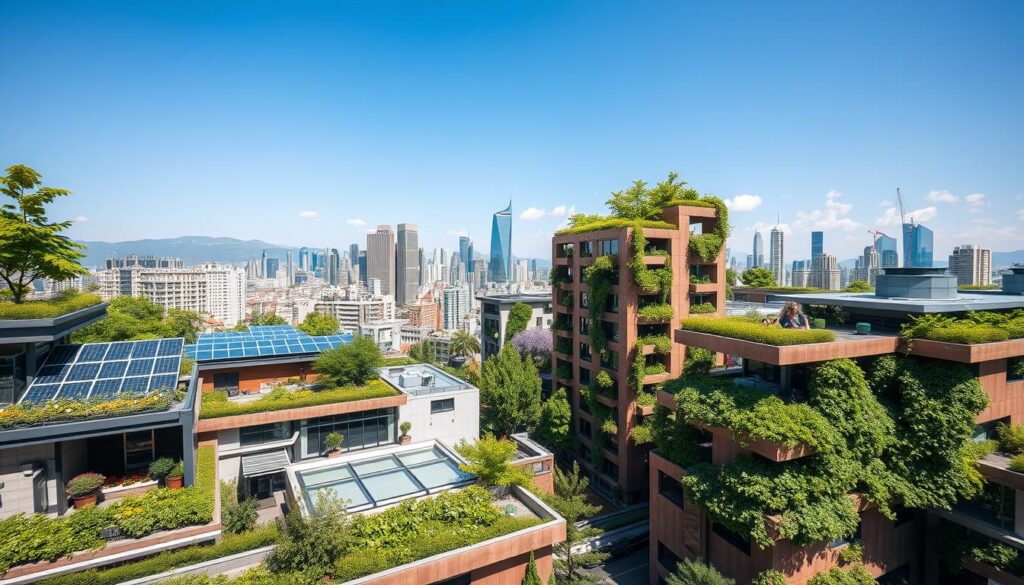
The Singapore government is supporting these efforts with programs like the Green Towns Program. Developers are working with these plans to make their projects more sustainable. This helps the city-state reach its sustainability goals.
As more people want eco-friendly homes, Singapore’s developers are ready. They’re using new sustainable practices. This not only meets buyer demands but also sets new standards in the industry.
Consumer Demand and Preferences
Singapore’s property market is changing, with buyers wanting more amenities and lifestyle features. Luxury condominiums and high-end projects are in demand, especially in Orchard Road. People want homes close to public transport and essential services.
There’s a growing interest in homes that offer everything under one roof. Buyers also want homes that are eco-friendly and smart. With more people working from home, there’s a need for homes with office spaces or flexible layouts.
Research shows that demand for million-dollar flats in Singapore is still high. This is true for first-time buyers and those upgrading from HDB flats. The PropertyGuru Market Index shows strong demand for these high-end homes.
Even with higher taxes on foreign buyers, local demand keeps the market strong. Buyers are looking for value in recently completed homes. Homes outside the central region are seeing more growth in demand.
Upcoming Projects to Watch
Singapore’s property market is buzzing with new projects. The Sembawang North estate is one to watch. It will have 8,000 BTO flats and 2,000 private homes. The project celebrates the area’s maritime history, aiming to build a lively waterfront community.
Woodlands North Coast is another exciting project. It’s a 21-hectare mixed-use waterfront area with about 4,000 new homes. It’s set to launch in February 2025, promising to make Woodlands a bustling hub.
Newton is also getting a makeover. Plans include new homes and keeping the area’s historical charm. These projects will likely change the market, affecting property values and who lives where.
As Singapore grows, people are watching these projects closely. They aim to create sustainable, livable communities. These developments will shape Singapore’s real estate future.
Future Outlook for Singapore Property Developers
The future for Singapore’s property developers looks bright. Companies like Hongkong Land are changing their strategies. They plan to leave residential development and focus on real estate investment trusts.
This move shows a shift towards managing funds. Hongkong Land wants to grow its assets to US$100 billion by 2035. This change could be a trend in the industry.
The Singapore property market is expected to do well. The country’s economic plans are key to this success. The market is set to stabilize, thanks to steady global wealth growth.
Singapore is leading Asia-Pacific with a wealth threshold of US$5.2 million. This is good news for the property market.
Leading developers will focus on sustainable and tech-driven projects. They will also create mixed-use spaces that meet changing consumer needs. The government’s efforts in infrastructure and sustainable planning will guide the industry.
The Singapore real estate market is expected to grow. It’s predicted to reach USD 64.04 billion by 2029. The growth rate is expected to be 9% until 2027.


